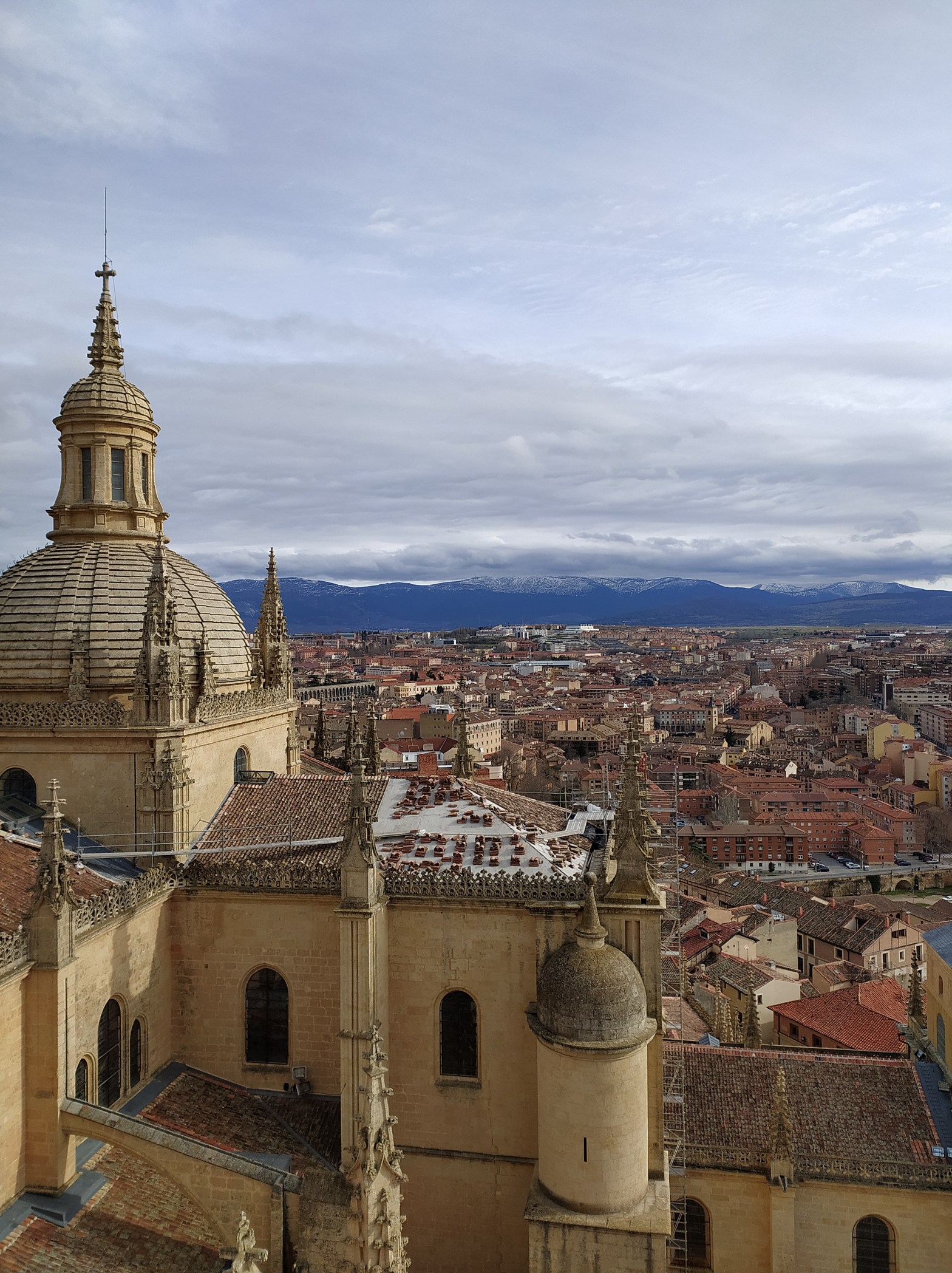
A mere hour and a half from Madrid city centre, Segovia is an amazing choice for a day trip from the city. Declared a World Heritage Site in 1985, the city centre of Segovia is right out of a typical European medieval city we all dream about. Winding and sloping streets, corner cafes, quaint stores, stacked and buildings barely squeezing in – all leading you on a path that one only can imagine. Conforming to all the stereotypes of our dream medieval city, Segovia actually has a long and eventful past. Once a Roman settlement, it has a beautifully preserved aqueduct, the highest part of it framing the views of the valley of tiled roof buildings dotting the landscape below you. With it’s 167 arches, walking along the aqueduct is an amazingly gratifying journey. You cross plazas, cute doors, tiny views of the snowy mountains behind, some highly questionable iconography graffiti-ed on walls (the town has a Jewish quarter, and a history of anti-semitism, I’ll get to that later).
Now let’s get into the details! Firstly how to go to Segovia?
There are bus as well as train options to go to Segovia. Your youth pass ‘abono juven’ doesn’t take you all the way to the town, so that makes it a little cumbersome. The easiest way is to book a bus on Omio for 7-8 euros for a return trip. Buses leave every half hour from Moncloa Bus Station in Madrid (right above the Metro station of the same name) and reach Segovia Autobus Estacion, which is just a ten minute walk from the Aqueduct.
Now that you’ve figured out how to reach the town, what to do there?
Take a walk along the main street filled with restaurants that you cannot afford and shops that might not interest you. Nevertheless, it is still a rewarding walk as it gives you glimpses of the aqueduct. Once you reach the aqueduct, walk along it. The existing monument ends rather unceremoniously on both ends, one at the the water house, and the other disappearing underground. Though the views that one gets on climbing to the top of the city wall right under the aqueduct are unforgettable. It’s surprisingly cute to see the buildings stacked together, the red tiled roofs, a few chimneys popping out here and there, a few significant modern buildings with their shiny new materials jutting out, and the snow capped mountains in the background.
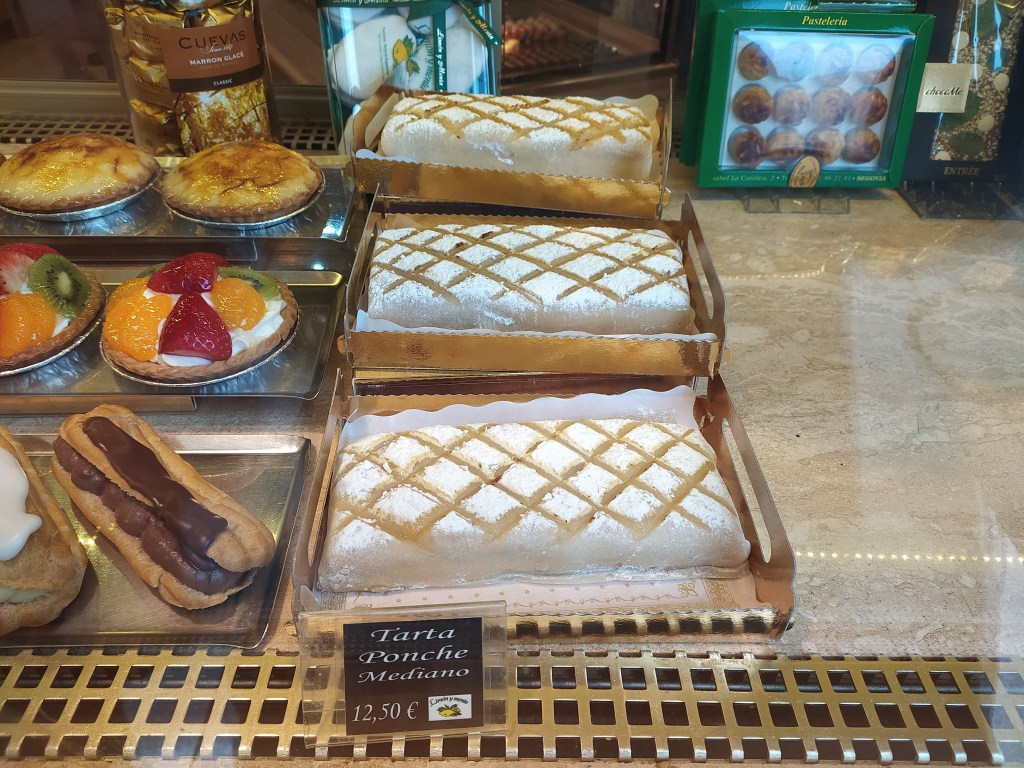
Next follow the Aqueduct markers on the pavement as it runs underground and reach the main plaza of the city – Plaza Mayor. Sitting right at the foot of the Cathedral of Segovia, you can stop to eat a Ponche Segoviana, the most famous sweet of the city – a cafe (El Alcazar) right at the Plaza even holds the patent to this particular dish. You can even take a pee stop at the underground bano (bathroom) too, right at the foot of the cathedral (devotional pee, it is).
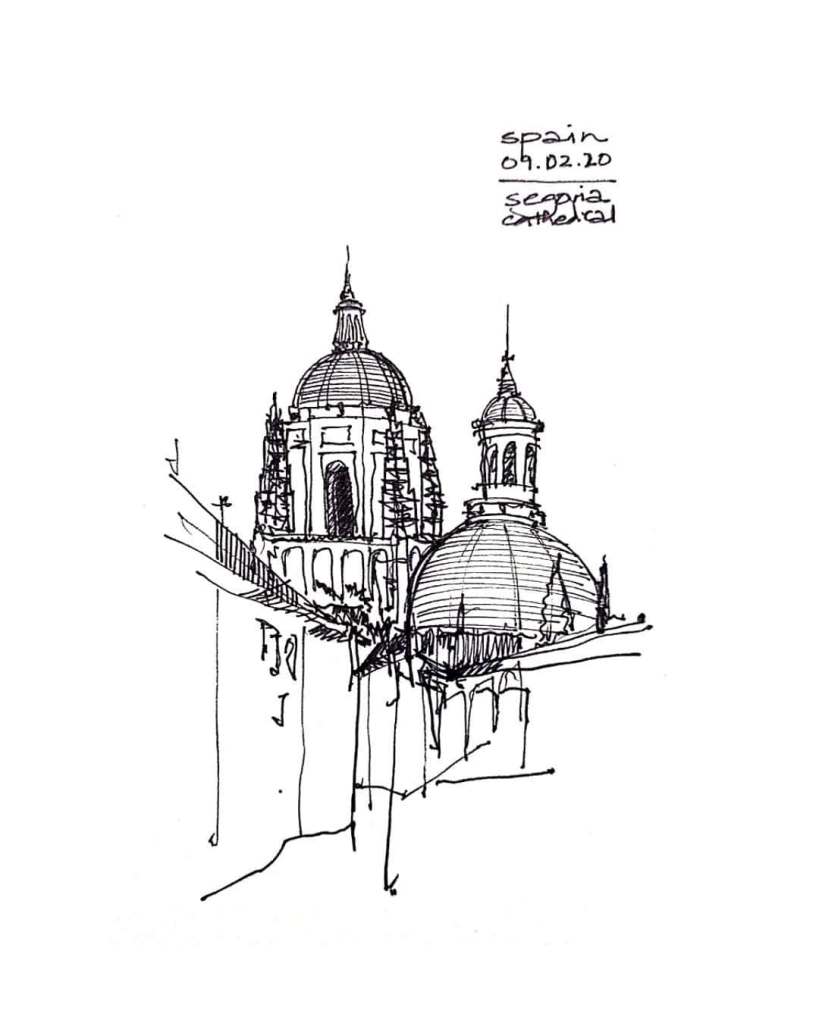
The Segovia Cathedral is worth a visit, built in the Gothic style in the mid 16th c. If you only want to visit the cathedral, there is a way to get in for free. During it’s lunch time, the cathedral closes at 12.30, and opens about an hour later. This way you can enter without buying a ticket, though it’s important to know that most sections of the cathedral remain closed at that time. The general ticket is 3 Euros for just the cathedral. But one should definitely take a tour of the bell tower, which was the tallest in its time, until it got burned down and rebuilt. The ticket for an English guided tour of the bell tower plus a visit to the cathedral costs 5 Euros for students. You get to climb around 180 steep spiral steps, though there are two stops in between for a audio visual show and a tour around the bell ringer’s house. It provides one with the prettiest views of the city, since it’s the highest you can go.
Walk around the winding streets where a lot of cute shops are just waiting to be discovered; eat a few more desserts (I am bewildered at how many bakeries exist in Segovia); climb up and down the same streets a few times, you might get lost, but it’s easy to find your way back.
You can also try visiting the Alcazar which is what inspired the Disney Castle, or the Jewish quarter, where the Jews are buried right outside the city walls in grottos along the rocky side of the hill, since they couldn’t be buried inside or pray inside the city limits. Sigh, there’s always something terrible happening right. Anyway, that’s all about the details for a day trip to Segovia, the rest is to be found while you’re there!
 this and that.